Environmental Economics
Climate change and the transition towards a more sustainable economy present policymakers, public administrations, and businesses with complex economic challenges. Environmental and sustainability considerations are increasingly integrated into strategic decision-making — for example in the context of climate strategies, regulatory adjustments, or investment decisions. In this context, the economic assessment of policy measures is becoming increasingly important to identify efficient and effective solutions.
Swiss Economics supports public institutions, companies, and associations in the economic assessment, design, and evaluation of environmental and climate policies. This includes, among other things, economic impact assessments of environmental measures (VOBU) in accordance with the methodological guidelines of the Federal Office for the Environment (FOEN). We develop robust decision-making foundations, quantify macroeconomic impacts, and identify efficient and practical policy options.
Our analytical approaches:
- Impact models and impact analysis. We develop impact models and analyse qualitative and quantitative causal chains to transparently identify key drivers, trade-offs, and economic effects of policy measures.
- Cost-benefit and distributional impact analyses. We assess the economic efficiency of measures and analyse their effects on different stakeholders and social groups. In addition to aggregated impacts, we consider distributional aspects and sector-specific implications.
- Quantification of external costs. Many environmental issues are driven by externalities and public goods. We quantify external costs (e.g., emissions, air pollution, or noise), make environmental impacts economically comparable, and derive recommendations for the design of appropriate economic policy instruments.
- Qualitative methods and stakeholder engagement. We complement quantitative analyses with interviews, workshops, and surveys to systematically capture stakeholder perspectives, validate assumptions, and assess feasibility and acceptance of measures.
- Behavioral economics approaches. Behavioral economic tools can help promote more sustainable decisions. We develop and evaluate nudges and other behaviour-based measures.
Selected application areas:
- Sustainable mobility. We analyse the economic impacts of mobility measures, such as traffic calming, public transport service design, or parking policies. Our analyses consider external costs, behavioural changes, and interactions between transport, environment, and the economy.
- Energy and the energy transition. We analyse economic questions related to the energy transition, such as support mechanisms for renewable energy, electricity market design, energy efficiency programmes, and the economic impacts of energy policies. Our work considers cost structures, market incentives, and regulatory frameworks.
Contact


Selected Projects

Future Grid Financing
How should the costs of the electricity grid be financed in the future?
more ...

Regional Value Creation from Alpine Photovoltaics
What is the extent of regional value creation generated by an alpine solar installation?
more ...

VOBU on the impact of Switzerland joining the Copernicus Earth observation programme in 2028
What are the environmental, economic and social impacts of Switzerland joining the Copernicus Earth observation programme in 2028?
more ...


International developments in ESG and their impact on Swiss SME
Increasingly comprehensive rules on sustainability reporting and due diligence apply in the EU. What does this mean for Switzerland and its SMEs?
more ...

Efficient design of regulatory instruments with a focus on environmental policy
How can regulatory instruments be designed effectively and efficiently?
more ...

Environmental impacts of DLT-applications
How resource and energy efficient are different DLT applications?
more ...

Effect of price signals and government measures on electricity demand
How have end customers reacted to the rise in electricity prices? What role do government measures play?
more ...

Revenue opportunities Swiss hydropower
What are the revenue opportunities for different hydropower plants in Switzerland? What role do the various sales options such as spot, futures, ancillary services, capacity and proof-of-origin markets play?
more ...
Value creation effects of the Climate Protection Law (KIG)
What is the impact of the KlG on the value chains?
more ...

Reference network analysis and cost driver analysis of electric utilities
Looking ahead to the energy transition, what are potentially suitable comparison parameters for an efficiency comparison?
more ...
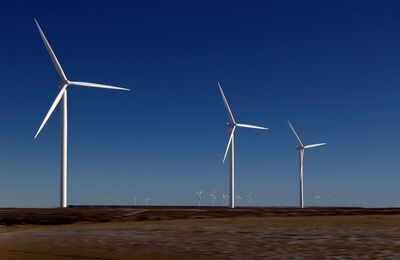
Economic Assessment of Climate Change Measures and Strategies
How effective and efficient are cantonal climate measures and strategies?
more ...

Connecting renewable energies to distribution grids
How do distribution system operators (DSOs) assess the connection of renewable energies? Is there a need for harmonization?
more ...

Importance of parking spaces in city centres
What commercial effects do traffic calming measures in inner cities have in Switzerland and Europe? What is the role of parking spaces?
more ...

Shared economy and traffic in Switzerland
What transport effects do new sharing services have? To what extent do new sharing approaches change people's mobility behaviour?
more ...